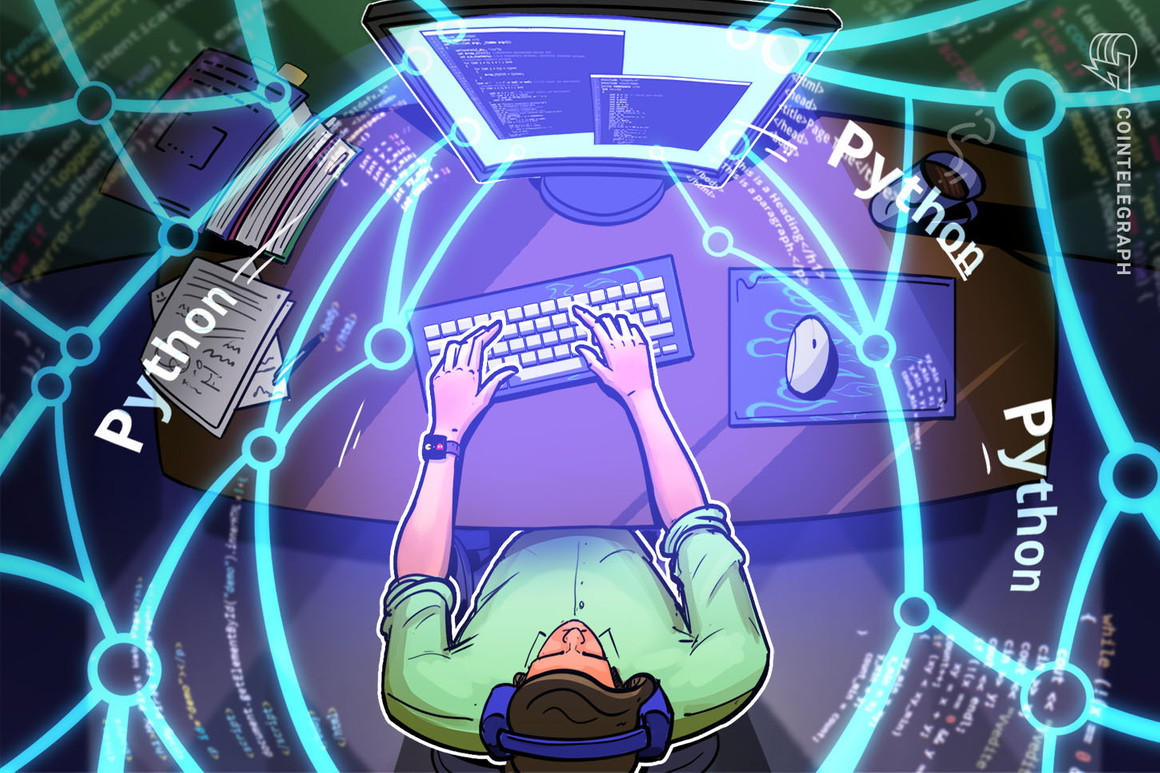
Python is an interpreted, object-oriented and high-level programming language created by Guido van Rossum. The language’s design philosophy emphasizes code readability and simplicity, making it a popular choice for beginners and experienced developers.
Python’s journey began in the late 1980s and early 1990s, and it has since evolved into one of the most widely used and beloved programming languages across various domains.
Birth of Python
Van Rossum, a Dutch programmer, started working on Python in December 1989 during his Christmas holidays while working at the Centrum Wiskunde & Informatica (CWI) in the Netherlands. His goal was to create a language that would be easy to read, write and maintain.
In my high school senior year I was voted “least likely to invent his own programming language.”
— Guido van Rossum (@gvanrossum) April 24, 2023
Early development
Early in the 1990s, Python continued to be developed, and on February 20, 1991, it had its first public release, version 0.9.0 — the first time the programming community saw Python. The language design used elements from several other programming languages, including ABC, Modula-3, C, and others, to produce a flexible and expressive syntax.
Python 2 vs. Python 3
Python 2.0, which included several new features and enhancements, was released in 2000. However, as the language developed, some design choices in Python 2 made it more difficult to maintain and advance the language.
In response, Python 3 was created and launched on Dec. 3, 2008. With the introduction of backward-incompatible improvements to enhance consistency and eliminate unnecessary functionality, Python 3 represented a substantial advancement.
However, Python 3 is not fully backward compatible with Python 2 — which has reached its end of life and is no longer actively maintained — requiring some code adjustments when migrating between versions.
fwiw, I just noticed that filter() does work differently in Python 2 vs 3.
Python 2:
filter(lambda x: x % 2 == 0, range(10))
[0, 2, 4, 6, 8]Python 3:
>>> a = filter(lambda x: x % 2 == 0, range(10))
>>> a
<filter object at 0x7f53364a7130>
>>> list(a)
[0, 2, 4, 6, 8]— Anatoly Karp (@akarp) March 3, 2021
The most recent stable release of Python 3.10.4, the fourth maintenance release of Python 3.10, was officially published on March 24, 2023.
Increased popularity
Python’s popularity has grown over the years due to its readability, adaptability and simplicity of usage. Its clear and simple syntax was well-liked by developers because it simplified writing and understanding code.
The availability of a sizable standard library and several third-party packages via the Python Package Index accelerated Python’s acceptance. These applications include web development, data analysis, artificial intelligence, scripting, automation and more.
Related: How to learn Python with ChatGPT
Python in the modern era
Python had become one of the most popular programming languages by the 2010s, and its use has only grown since then. Python’s thriving community and environment were boosted by the adoption of the language by several IT businesses, startups, and organizations for their projects.
What is Python called Python?
Van Rossum named Python in honor of the British comic troupe Monty Python’s Flying Circus, who he was a fan of.
Despite its humorous beginnings, Python has developed into a serious and important programming language that powers important projects and systems all around the world. However, the amusing association with Monty Python has remained a charming feature of Python’s past.
Related: 7 most in-demand programming languages to learn
What should Python not be used for?
Python is a powerful and versatile programming language that can be used for a variety of purposes. However, there are several circumstances where it might not be the best option. Some examples are real-time systems, resource-intensive software, mobile app development, high-frequency trading, system-level programming, memory-intensive software, mobile or console gaming, and certain cryptographic algorithms.
Nonetheless, it is crucial to remember that using the correct libraries and tools can frequently help overcome Python’s restrictions. The choice of programming language ultimately depends on the project’s needs, the team’s experience and the development goals. Python is still a well-liked and helpful language that can be used alone or in combination with other languages to accomplish many tasks.