Translation is the process of converting written or spoken content from one language to another while preserving its meaning. By automating and enhancing the translation process, artificial intelligence (AI) has significantly contributed to changing the translation industry.
To evaluate and comprehend the structure, syntax and context of the source language and produce correct translations in the target language, AI-powered translation systems use machine learning algorithms and natural language processing techniques.
Types of AI-powered translation systems
AI-powered translation systems can be categorized into two main approaches:
Rule-based machine translation (RBMT)
To translate text, RBMT systems use dictionaries and pre-established linguistic rules. Linguists and other experts create these guidelines and dictionaries that specify how to translate words, phrases and grammatical structures.
While RBMT systems are capable of producing accurate translations for some language pairs, they frequently face limitations due to the complexity and diversity of linguistic systems, which makes them less useful for translations that are more complex.
Statistical machine translation (SMT)
SMT systems employ statistical models that have been developed using sizable bilingual corpora. These algorithms analyze the words and phrases in the source and target languages to find patterns and correlations.
SMT systems are able to make educated assumptions about the ideal translation for a particular input by examining enormous volumes of data. With more training data, SMT systems get more accurate, although they may have trouble with unusual or rare phrases.
Neural machine translation (NMT) has recently become more well-known in the translation industry. To produce translations, NMT systems use deep learning methods, notably neural networks. Compared to earlier methods, these models are better able to represent the context, semantics and complexities of languages. NMT systems have proven to perform better than other technologies, and they are widely employed in many well-known translation services and applications.
Advantages of AI in translation
The use of AI in translation offers several advantages:
- Speed and efficiency: AI-powered translation systems can process large volumes of text quickly, accelerating the translation process and improving productivity.
- Consistency: AI ensures consistent translations by adhering to predefined rules and learned patterns, reducing errors and discrepancies.
- Customization and adaptability: AI models can be fine-tuned and customized for specific domains, terminologies or writing styles, resulting in more accurate and contextually appropriate translations.
- Continuous improvement: AI systems can learn from user feedback and update their translation models over time, gradually improving translation quality.
AI tools for translation
There are several AI tools available for translation that leverage machine learning and natural language processing techniques. Here are five popular AI tools for translation:
Google Translate
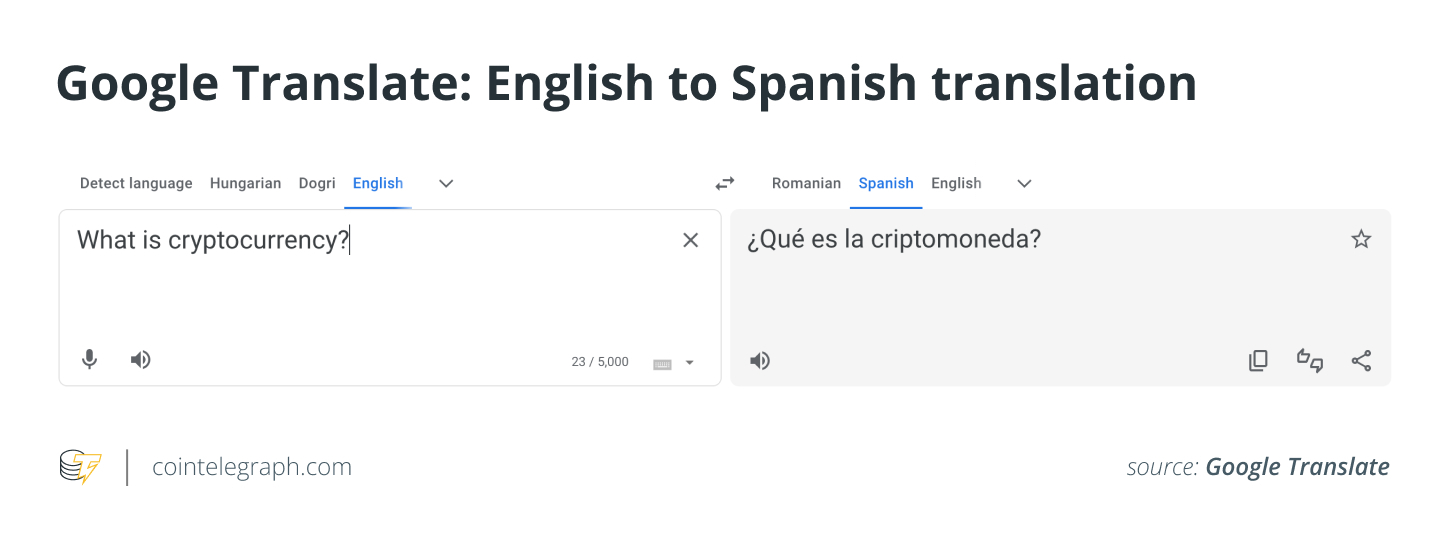
Google Translate is a widely used AI-powered translation tool. To offer translations for different language pairs, it combines rule-based and neural machine translation models. It offers functionalities for text translation, website translation and even speech-to-text and text-to-speech.

Google Translate offers both free and paid versions. The basic translation services, including text translation, website translation and basic speech-to-text features, are accessible to users for free. However, Google also offers a paid service called Google Translate API for developers and businesses with more extensive translation needs. API usage is subject to pricing based on the number of characters translated.
Microsoft Translator
Another capable AI translation tool is Microsoft Translator. It offers translation services for many different languages and makes use of neural machine translation models. It offers developers APIs and SDKs so they may incorporate translation functionality into their projects.

Microsoft Translator offers a tiered pricing model. It has a free tier that allows users to access basic translation services with certain limitations. Microsoft also provides paid plans for higher volume and advanced features. The pricing is typically based on the number of characters translated or the number of API requests made.
DeepL
DeepL is an AI-driven translation tool known for its high-quality translations. It utilizes neural machine translation models and claims to outperform other popular translation tools in terms of accuracy. DeepL supports multiple language pairs and offers a user-friendly interface.

DeepL offers both free and paid versions. The free version of DeepL allows users to access its translation services with certain usage restrictions. DeepL also offers a subscription-based premium plan called DeepL Pro, which provides additional benefits, such as faster translation speeds, unlimited usage and the ability to integrate the service into other applications.
Systran
Systran is a language technology company that provides AI-powered translation solutions. It offers a range of products and services, including neural machine translation engines, translation APIs and specialized industry solutions. Systran focuses on customization and domain-specific translations.
Pricing for Systran’s offerings is typically based on the specific requirements and level of customization desired by the client.

Trados Enterprise
RWS is a global leader in translation and localization services, and it provides various language technology solutions to support translation and multilingual content management.
One of its language technology offerings is Trados Enterprise (previously RWS Language Cloud). This cloud-based platform is designed to streamline the translation process, enhance collaboration and improve translation quality. It provides a range of features and tools to manage translation projects, such as translation memory, terminology management, project management and linguistic assets.
Trados Enterprise offers different versions tailored to specific needs. The Studio version is priced at $125 per month and provides an industry-leading computer-assisted translation (CAT) tool for professional linguists. The Team version, priced at $185 per user per month, focuses on cloud-based collaboration for translation projects.
The Accelerate version starts at $365 per user per month and offers end-to-end translation management for organizations with custom requirements. RWS also provides a free trial for interested users and encourages potential customers to request a demo to explore their offerings in detail.