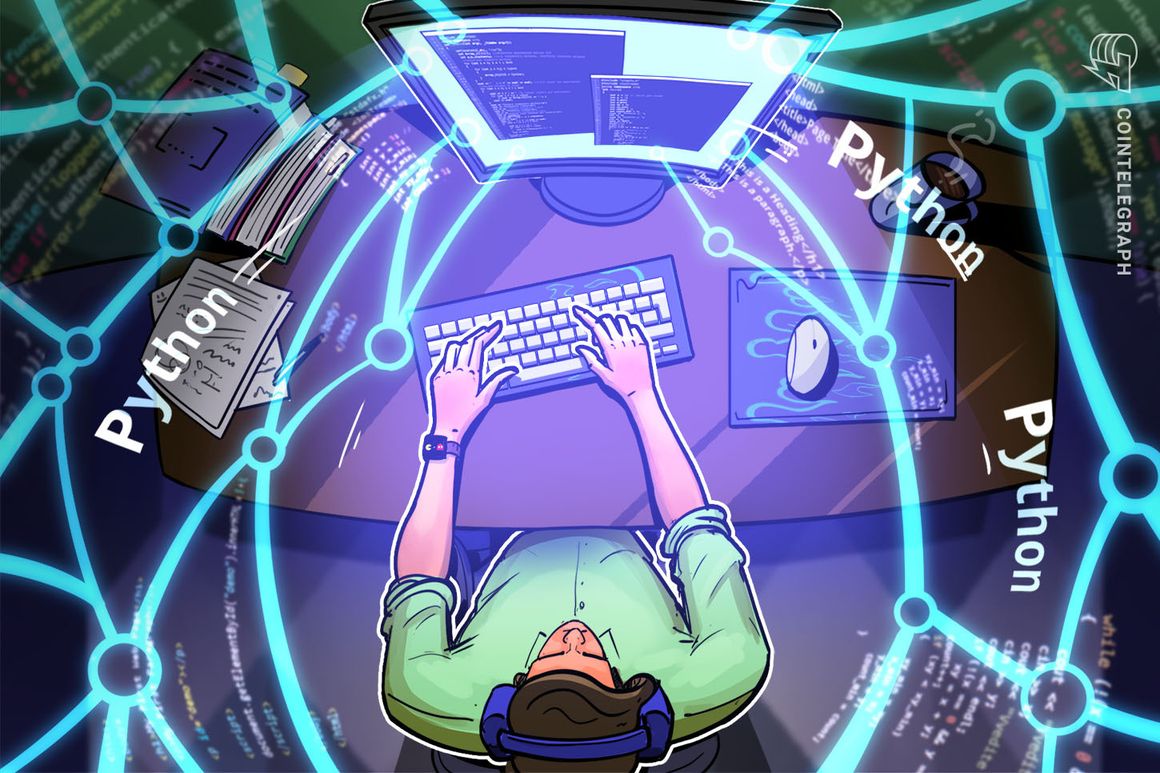
Python, a versatile and user-friendly programming language, has gained immense popularity for its simplicity and power. Its extensive libraries and frameworks have paved the way for innovative solutions in a wide range of industries.
From web development to data analysis, Python’s capabilities have transformed the way programmers approach and solve problems. This article will explore five real-world Python applications that are making a significant impact in different sectors.
Web development: Django and Flask
Python’s prominence in web development is evident through frameworks such as Django and Flask. Django, a high-level web framework, offers an all-inclusive package for building robust web applications. Its “batteries-included” philosophy equips developers with tools for database management, authentication and more. Instagram and Pinterest are notable platforms built on Django.
On the other hand, Flask, a micro web framework, provides flexibility and simplicity, making it a great choice for smaller projects and startups. Its modular design encourages developers to choose the components they need, promoting scalability. Lyft, a ride-sharing service, employs Flask in its backend systems.
Data analysis and visualization: Pandas and Matplotlib
Python’s dominance in data analysis is evident through libraries such as Pandas and Matplotlib. Pandas simplifies data manipulation with its data structures, allowing analysts to clean, transform and analyze data efficiently. Matplotlib, a versatile plotting library, aids in creating various visualizations, from basic graphs to intricate figures.
These tools have revolutionized industries by enabling data-driven decision-making. Financial institutions use them for risk assessment, while healthcare professionals employ them for patient data analysis and research.
Machine learning: TensorFlow and scikit-learn
Python’s impact on machine learning is profound, primarily driven by libraries such as TensorFlow and scikit-learn. TensorFlow, an open-source machine learning framework developed by Google, facilitates the creation of neural networks for tasks such as image and speech recognition. Its applications range from self-driving cars to healthcare diagnostics.
Scikit-learn, a machine learning library, offers tools for classification, regression, clustering and more. Its accessibility has democratized machine learning, enabling businesses to implement predictive analytics for customer behavior, fraud detection and personalized recommendations.
Related: 5 Python libraries to interpret machine learning models
Scientific computing: NumPy and SciPy
Python’s role in scientific computing is prominent due to libraries such as NumPy and SciPy. NumPy provides support for arrays and matrices, along with mathematical functions to operate on these structures. This is invaluable for scientific simulations, image processing and more.
SciPy builds upon NumPy by adding additional functionality for optimization, integration, interpolation and other scientific computing tasks. Researchers in fields such as physics, engineering and biology utilize these tools for simulations and data analysis.
Which #Python library do you use to find pi?
math
scipy
➗ numpyAll three will return the same thing! #piDay #piDay2023 pic.twitter.com/ALnIgHutc9
— Mike Driscoll (@driscollis) March 14, 2023
Internet of Things (IoT): MicroPython
Python’s reach extends to the Internet of Things (IoT) through MicroPython. MicroPython is a lean and efficient implementation of Python 3 (written in C), designed to run on microcontrollers and small embedded systems. This allows developers to use Python for programming IoT devices, making it easier to create applications for sensors, actuators and other connected devices.
MicroPython’s simplicity and versatility have paved the way for rapid prototyping and deployment of IoT solutions, from smart home devices to industrial automation.
Related: 7 real-world IoT applications and examples
Python’s adaptability and vast ecosystem of libraries have enabled its application across diverse industries. From web development to scientific research, from data analysis to machine learning, Python continues to drive innovation and transformation. Its user-friendly syntax and powerful capabilities make it an ideal choice for developers and businesses seeking to create efficient and impactful solutions in the modern world.