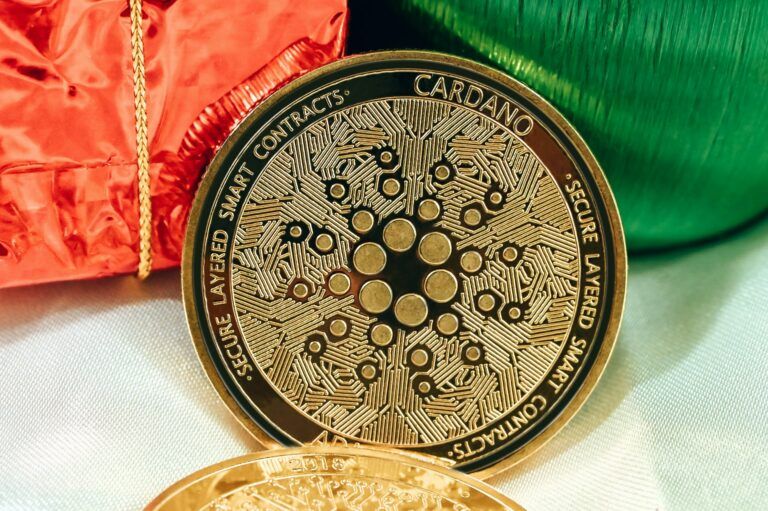
Recently, a heated debate has emerged within the Cardano community concerning the centralization implications of its “genesis keys.” Earlier today, Justin Bons, Founder and CIO of Cyber Capital, sparked the discussion with a series of posts on social media platform X, where he highlighted the centralized control these keys afford to Input Output Global (IOG), one of the three organizations responsible for Cardano’s research and development.
Bons’ Critique of Cardano’s Centralization
Bons’ thread began with a stark assertion that Cardano (ADA) possesses “genesis keys,” a multi-signature setup that controls all protocol rules. He argued that ADA’s claim of being the “most decentralized” chain is contradicted by this centralized feature, as IOG controls five out of seven keys, allowing them to unilaterally change the protocol. Bons emphasized the irony in ADA’s claims of decentralization.
In his second post, Bons elaborated on the power these keys grant, allowing code changes without the need for a hard fork. He warned that IOG could potentially halt the chain, alter emission schedules, or censor transactions, which he described as an unprecedented level of centralized control for a Layer 1 blockchain.
Bons traced the origin of these keys to the Shelley update in 2020. Initially, IOG did not have absolute control; however, one of the other key holders, the Cardano Foundation (CF), delegated their control to IOG, granting them full authority. Bons criticized this design, arguing that even requiring IOG to gain the support of only one of two other parties was insufficiently decentralized.
While acknowledging Cardano’s efforts towards on-chain governance with the Voltaire upgrade, Bons noted that the genesis keys still render ADA centralized at present. He concluded by urging the community to “verify, not trust,” highlighting the importance of scrutinizing such centralized mechanisms.
Cardano YODA’s Response
Cardano influencer “Cardano YODA” responded to Bons with a detailed clarification, aiming to correct what he saw as misconceptions. He explained that fundamental protocol changes in Cardano must first be accepted by full node operators who install the new version of the client. Genesis keys, he noted, are merely a tool to trigger a hard fork, and cannot initiate changes without broad community support.
YODA pointed out that the genesis keys are used to adjust protocol parameters such as staking rewards or block size, always with community approval. He cited an example where a vote preceded the lowering of the fixed reward minimum from 340 ADA to 170 ADA, emphasizing transparency in the process.
He defended the genesis keys as a flexible and smart solution, arguing that they allow for necessary adjustments without the need for extensive new code development and testing. Furthermore, YODA asserted that genesis keys cannot censor transactions, steal user funds, or halt consensus, as these are protected by users’ private keys.
YODA concluded by noting that Cardano’s governance will soon transition to the community, with genesis keys losing their functionality. Roles currently held by IOG, CF, and Emurgo will be replaced by decentralized representatives (DReps), enabling more distributed decision-making.
Bons’ Rebuttal
In his response, Bons expressed appreciation for YODA’s detailed explanation but maintained his stance on the centralization issue. He acknowledged that validators must install new versions of the client but pointed out that most blockchains set a fork to activate at a specific block height, unlike Cardano’s centralized multi-signature trigger.
Bons reiterated that while he never claimed genesis keys could steal user funds, they do have the potential to set ADA’s capacity to zero, effectively censoring all usage. He welcomed the move towards decentralization and expressed eagerness to analyze ADA’s on-chain governance once fully implemented.
The Broader Implications
YODA replied by comparing Cardano’s hard fork process to Bitcoin’s, noting similarities in how changes are implemented and activated. He argued that the real measure of decentralization lies in the number of operators making decisions. While Bitcoin’s consensus can be influenced by a few dominant pools, Cardano involves hundreds of operators and stakers, which he believes is more indicative of decentralization.
This debate underscores a critical issue in the blockchain community: the balance between flexibility and decentralization. While genesis keys offer a practical solution for protocol adjustments, their centralized nature raises concerns. Cardano’s commitment to transitioning towards a more decentralized governance model is a positive step, but the community will need to remain vigilant to ensure these changes promote true decentralization.
Featured Image via Unsplash