What if your next walk through the city could earn you a digital collectible—one that’s tied to your exact location and secured on the blockchain? That’s the promise of location-based NFTs. By combining GPS tracking, augmented reality, and decentralised rewards, these technologies are transforming how we explore, play, and earn.
This article breaks down how location-based gaming NFTs work, highlights real-world examples, and explores what they mean for gamers, brands, and the future of play-to-earn.
Key Takeaways
-
Location-based NFTs require players to physically visit GPS-tagged spots to unlock or mint digital rewards.
-
These NFTs blend blockchain, GPS, and AR technologies to deliver immersive, on-the-go, play-to-earn experiences.
-
Projects like StepN are proving the real-world potential of this model.
-
Businesses are integrating location-based NFTs into marketing and community engagement strategies.
-
The market for NFT-based games is growing fast, projected to expand at 24.8% CAGR through 2034.
What Are Location-Based NFTs?
At their core, location-based NFTs are digital assets tied to specific physical places. To access one, you need to be there—literally. This model creates a hybrid between digital gaming and real-world movement, rewarding users who actively explore their surroundings.
Unlike standard NFTs that can be bought from a marketplace, these collectibles are geofenced. Players must physically go to mapped coordinates, where GPS confirms their presence.
This physical presence is often validated through blockchain protocols and hardware solutions designed to prevent spoofing. Some games enhance this moment with AR overlays, making the experience feel like a digital treasure hunt.
Blockchain helps keep everything secure, making sure each NFT is authentic and belongs to the right person. Once you’ve unlocked one, you can hang onto it, trade it, or use it for special bonuses in-game. It’s a little bit of gaming, a bit of fitness, some exploration, and a dose of collecting—all mixed together in one experience.
In many ways, it mirrors the popularity of titles like Pokémon GO but adds value through tokenized rewards and ownership.
How Location-Based NFTs Work
Location-based NFTs use a layered tech stack:
-
GPS & Geofencing: Anchors NFTs to specific real-world coordinates.
-
Augmented Reality (AR): Adds visual elements, guiding players as they reach their destination.
-
Proof-of-Presence Tools: Devices like IoTeX’s Pebble Tracker confirm physical location and help prevent spoofing.
-
Smart Contracts: These self-executing contracts automate the minting and transfer of NFTs once location data is authenticated.
Developers need to manage real-time GPS data, integrate it with user-friendly mobile interfaces, and sync everything with blockchain transactions—no small feat, as it requires coordination between multiple technologies.

Source: StepN
Real-World Examples Driving the Trend
Several platforms have already embraced the model, each offering a different spin on location-based gaming.
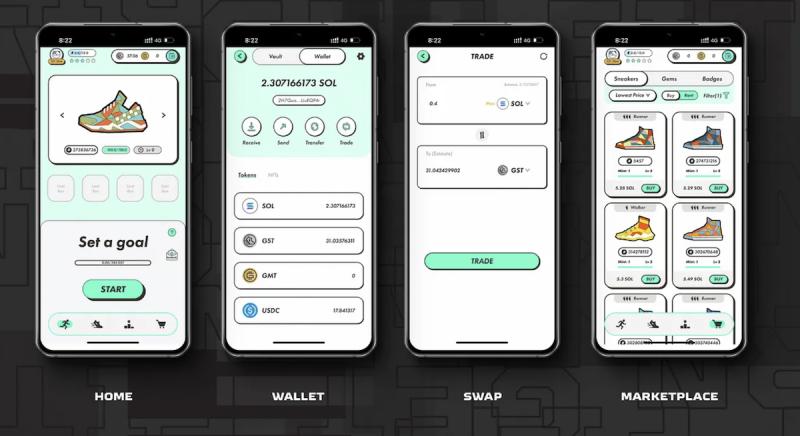
StepN rewards players for walking or running, tracked through GPS. It’s one of the first successful “move-to-earn” models, converting everyday motion into blockchain-based incentives.
GeoNFT gamifies local travel with AR-based scavenger hunts. Players follow clues, visit marked locations, and collect digital items.
Kryptomon combines virtual pet games with real-world movement. Players search neighborhoods to discover and capture blockchain-backed creatures.
Proof-of-Travel NFTs can act as digital badges or souvenirs tied to visited locations—useful for tourism, events, or commemorating unique experiences.
While these platforms offer engaging new interactions, they also raise challenges, including potential privacy concerns (since constant location tracking is involved) and technical vulnerabilities such as GPS spoofing—despite the use of anti-fraud mechanisms.
How Brands Are Getting Involved
Businesses are increasingly using location-based NFTs to connect with audiences in new ways.
Some retailers drop exclusive NFTs at select store locations. Customers who visit and scan a code can unlock limited-edition items or future discounts.
At events and festivals, organizers distribute NFTs tied to activities or areas—encouraging attendees to explore more of the venue.
Larger campaigns are also emerging.
A tourism board, for instance, could deploy collectible NFTs at major landmarks, offering travelers a digital passport of their journey that doubles as a promotional tool.
Market Growth and Innovation
The NFT gaming market reached $4.8 billion in 2024 and is projected to grow through 2034. Location-based mechanics are a key part of that growth, offering fresh value to both players and developers.
What’s next? Expect:
-
Dynamic NFTs that evolve based on movement or actions.
-
Cross-platform compatibility, allowing NFTs to be used in multiple games.
-
AI-driven experiences that adapt quests and rewards to player behavior.
As blockchain and mobile technology advance, location-based gaming is likely to expand into sectors such as education, outdoor recreation, and even wellness.
Conclusion
Location-based NFTs could mark an intriguing evolution in Web3 gaming by connecting digital ownership with real-world activity. Even though the model offers exciting opportunities for immersive engagement and creative marketing, it also introduces challenges.
Privacy, GPS accuracy, accessibility, and hardware reliability must all be managed for these systems to scale sustainably.
As brands and developers explore new applications, striking a balance between innovation and responsibility will be key. Whether you’re exploring your neighborhood or designing new campaigns, location-based NFTs highlight the growing intersection between our physical and digital lives—with both potential and pitfalls worth considering.