• Crypto
    • Bitcoin
    • Ethereum
    • Altcoins
    • Cardano
    • Solana
  • Web 3
    • Metaverse
    • NFT
  • Blockchain
  • Analysis
  • Learn
  • AI & VR
  • Gaming
  • Marketcap
  • Shop
What's Hot

Is Staking Crypto Safe? What You Should Know Before Staking

September 15, 2026

What Is the CLARITY Act and What Does It Mean for Crypto?

September 14, 2026

What Is Cross Margin in Crypto? How It Works, Risks, and Examples

September 14, 2026
Facebook Twitter Instagram
  • Contact
  • Disclosure
  • Privacy Policy
  • Terms & conditions
Facebook Twitter Instagram
VIP Crypto Signals
  • Crypto
    • Bitcoin
    • Ethereum
    • Altcoins
    • Cardano
    • Solana
  • Web 3
    • Metaverse
    • NFT
  • Blockchain
  • Analysis
  • Learn
  • AI & VR
  • Gaming
  • Marketcap
  • Shop
VIP Crypto Signals
Home » Blog » Researchers in China developed a hallucination correction engine for AI models
AI & VR

Researchers in China developed a hallucination correction engine for AI models

October 25, 2023No Comments2 Mins Read
Share
Facebook Twitter LinkedIn Pinterest Email

A team of scientists from the University of Science and Technology of China and Tencent’s YouTu Lab have developed a tool to combat “hallucination” by artificial intelligence (AI) models. 

Hallucination is the tendency for an AI model to generate outputs with a high level of confidence that don’t appear based on information present in its training data. This problem permeates large language model (LLM) research. Its effects can be seen in models such as OpenAI’s ChatGPT and Anthropic’s Claude.

The USTC/Tencent team developed a tool called “Woodpecker” that they claim is capable of correcting hallucinations in multi-modal large language models (MLLMs).

This subset of AI involves models such as GPT-4 (especially its visual variant, GPT-4V) and other systems that roll vision and/or other processing into the generative AI modality alongside text-based language modelling.

According to the team’s pre-print research paper, Woodpecker uses three separate AI models, apart from the MLLM being corrected for hallucinations, to perform hallucination correction.

These include GPT-3.5 turbo, Grounding DINO, and BLIP-2-FlanT5. Together, these models work as evaluators to identify hallucinations and instruct the model being corrected to re-generate its output in accordance with its data.

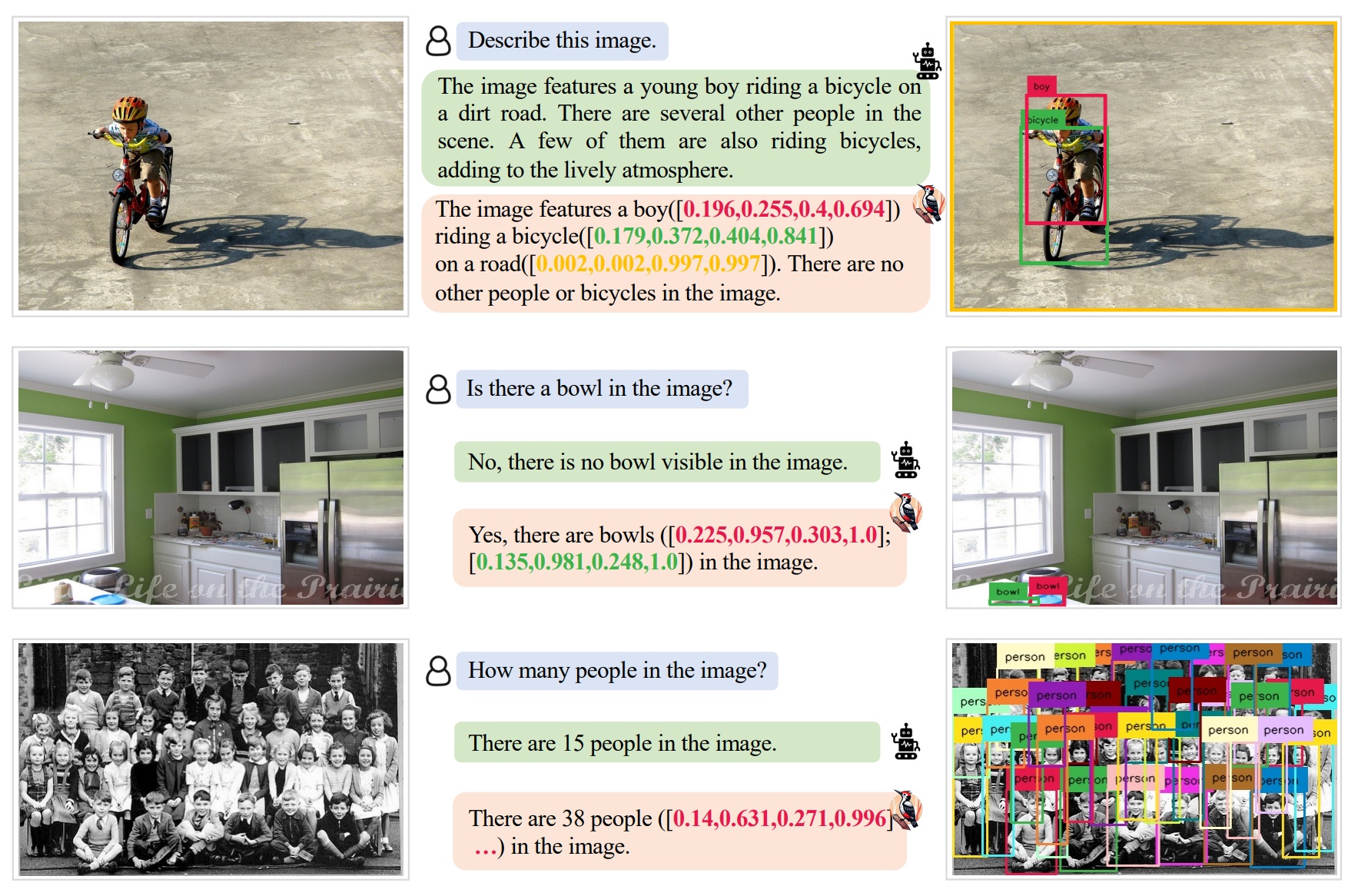
In each of the above examples, an LLM hallucinates an incorrect answer (green background) to prompting (blue background). The corrected “Woodpecker” responses are shown with a red background. (Image source: Yin, et. al., 2023).

To correct hallucinations, the AI models powering “Woodpecker” use a five-stage process that involves “key concept extraction, question formulation, visual knowledge validation, visual claim generation, and hallucination correction.”

The researchers claim these techniques provide additional transparency and “a 30.66%/24.33% improvement in accuracy over the baseline MiniGPT-4/mPLUG-Owl.” They evaluated numerous “off the shelf” MLLMs using their method and concluded that Woodpecker could be “easily integrated into other MLLMs.”

See also  Google, OpenAI, Microsoft form ‘Frontier Model Forum’ to regulate AI development

Related: Humans and AI often prefer sycophantic chatbot answers to the truth — Study

An evaluation version of Woodpecker is available on Gradio Live where anyone curious can check out the tool in action.

Source link

China correction Developed engine hallucination models researchers
Share. Facebook Twitter Pinterest LinkedIn Tumblr Email

Related Posts

Why Hybrid Gaming Models Are Leading Web3 Gaming

March 9, 2026

MENA Emerges as Global Growth Engine for Blockchain Gaming, BGA 2025 Report Finds

December 11, 2025

The Future of NFT Gaming: How Play-to-Earn Models Are Changing the Game

October 10, 2025

How NFT Utility is Evolving in ETH-Based Earning Models

September 27, 2025
Add A Comment

Leave A Reply Cancel Reply

Top Posts

Is Staking Crypto Safe? What You Should Know Before Staking

September 15, 2026

What Is the CLARITY Act and What Does It Mean for Crypto?

September 14, 2026

What Is Cross Margin in Crypto? How It Works, Risks, and Examples

September 14, 2026

Subscribe to Updates

Get the latest news and Update from VIP Crypto Signals about Crypto, Web3, Metaverse, NFT and more.

Our mission is to develop a community of people who try to make financially sound decisions. The website strives to educate individuals in making wise choices about Cryptocurrencies, NFT, Metaverse and more.

We're social. Connect with us:

Facebook Twitter Instagram Pinterest YouTube
Top Insights

Is Staking Crypto Safe? What You Should Know Before Staking

September 15, 2026

What Is the CLARITY Act and What Does It Mean for Crypto?

September 14, 2026

What Is Cross Margin in Crypto? How It Works, Risks, and Examples

September 14, 2026
Get Informed

Subscribe to Updates

Get the latest news and Update from VIP Crypto Signals about Crypto, Web3, Metaverse, NFT and more.

Facebook Twitter Instagram Pinterest
  • Contact
  • Disclosure
  • Privacy Policy
  • Terms & conditions
© 2026 Vip Crypto Signals - All rights reserved.

Type above and press Enter to search. Press Esc to cancel.

  • FibSwap DEXFibSwap DEX(FIBO)$0.0084659.90%
  • bitcoinBitcoin(BTC)$70,953.006.13%
  • ethereumEthereum(ETH)$3,664.5818.50%
  • tetherTether(USDT)$1.00-0.01%
  • binancecoinBNB(BNB)$627.698.99%
  • solanaSolana(SOL)$181.131.69%
  • staked-etherLido Staked Ether(STETH)$3,662.5418.48%
  • usd-coinUSDC(USDC)$1.00-0.02%
  • rippleXRP(XRP)$0.545.05%
  • dogecoinDogecoin(DOGE)$0.1634778.14%