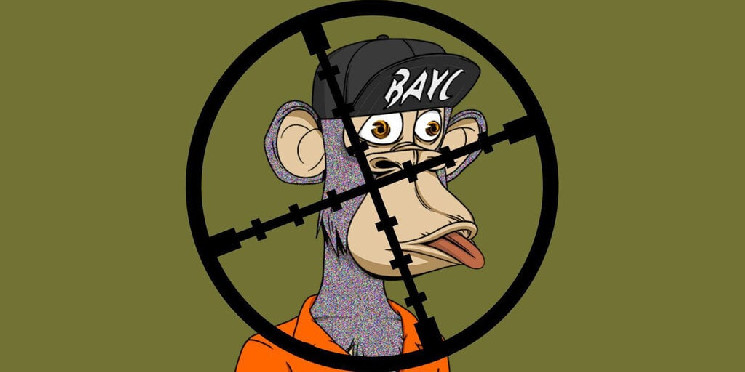
When NFT marketplace OpenSea announced last week that it anticipates a lawsuit from the U.S. Securities and Exchange Commission (SEC), bells of panic rang far and wide through the cryptosphere. The U.S. government was opening up a major new front in its war on crypto: It was finally coming for the heart of the NFT market.
But what does the development actually mean? Is every major NFT project now about to be labeled an illegal, unregistered security as some fear? Or might only particularly cash-grabby projects be at risk of legal scrutiny?
While it may be some time before the SEC makes its position clear, legal experts told Decrypt that past NFT-related enforcement actions by the SEC and statements from agency leadership indicate that a large swath of NFT projects—those that made certain marketing decisions—could be swept into any future litigation. But likely not at the start, and not all at once.
“They’re always going to go after what they perceive as the lowest hanging fruit first,” Jeremy S. Goldman, a litigator focused on NFT regulation, told Decrypt. “They’ll just pick on the 50 projects with the most egregious fact patterns.”
To Goldman, “egregious” means two things in particular: projects that either hinted at some sort of return on investment when first marketing their NFTs, or projects that promised utility in the form of a team of people who were going to work to increase a collection’s brand or IP value. “Those are the hallmarks of an investment,” Goldman said.
In other words, the SEC is likely to follow the same playbook it used when it went after the scores of crypto startups that raised funds through ICOs. If you’re a startup that raised money by selling NFTs to build a product, you’re potentially in the SEC’s crosshairs.
Edward Lee, a law professor at the Illinois Institute of Technology specializing in NFTs, agrees that the SEC may be inclined to fixate on statements made during a collection’s rollout, given how the regulator approached its first-ever NFT-related enforcement actions last year.
“I think that could be a line they try to draw,” Lee told Decrypt. “‘Well, if the founder happens to say things that help create the expectation of profits, that is sufficient.’”
Lee, for his part, feels that such a legal argument would be “ultimately untenable,” regardless of the likelihood that the SEC pursues it. He points to other asset classes, like real estate: A home developer could tell you that you’re buying in a great neighborhood that will appreciate in value over time, for example, but doing so wouldn’t turn the house from a commodity into a security.
Of course, a house is also generally not considered a “common enterprise”—like, say, a startup would be—which is one of the four prongs of the Howey Test, the legal framework used to determine if an asset or transaction qualifies as a type of security known as an “investment contract.”
Another argument Lee disagrees with—but thinks the SEC may end up pursuing—is that any project with guaranteed creator royalties could be considered a securities offering.
When it pursued an enforcement action against the Mila Kunis-produced, NFT-backed web series Stoner Cats last fall, the SEC implied that creator royalties factored into its analysis. The Commission said in its order against the project that since Stoner Cats collected a 2.5% fee for every secondary sale of the NFTs, it demonstrated the team’s commitment to ensuring the long-term value of the project. After all, the greater the value of each NFT, and the more sales occurred, the more revenue the Stoner Cats team would generate from collecting royalties.
If creator royalties are part of the standard that the SEC relies on to classify NFT projects as securities, that could spell quite a lot of trouble for the industry. Most major NFTs, from renowned digital artworks to flashy profile picture (PFP) collections, collect those fees as an industry norm.
Goldman, however, is skeptical that the SEC would spend its time and resources going after iconic NFT collections like CryptoPunks. Despite the fact that CryptoPunks are now renowned investments capable of fetching eye-popping, multi-million dollar sums, the litigator said that it would likely be too difficult for the SEC to prove that the collection was initially designed and marketed for investment purposes. CryptoPunks were originally minted for free, and the studio behind the collection only kept 1,000 of the 10,000 total NFTs for itself.
“That just wasn’t the origin story for them,” Goldman said. “It was much more organic, and viral.”
If the SEC does in fact end up suing OpenSea, it may be months before the public learns which specific NFT collections sold on the site qualify as illegally traded securities in the Commission’s view.
But according to Arthur Jakoby, a former SEC prosecutor, OpenSea may already be privately aware of which NFT collections the agency is gunning for.
While Wells notices like the one OpenSea received can be vague, Jakoby told Decrypt, it is common practice for SEC lawyers assigned to a suit to call defense attorneys and lay out, in detail, the alleged facts of the case—including which specific assets are being labeled securities.
“It’s likely that the Wells notice does not identify which NFTs the SEC deems to be securities,” Jakoby said. “But it may be that [OpenSea] knows exactly which NFTs the SEC is claiming are securities.”
OpenSea did not respond to Decrypt‘s request for comment on this story.
Edited by Andrew Hayward and Guillermo Jimenez